

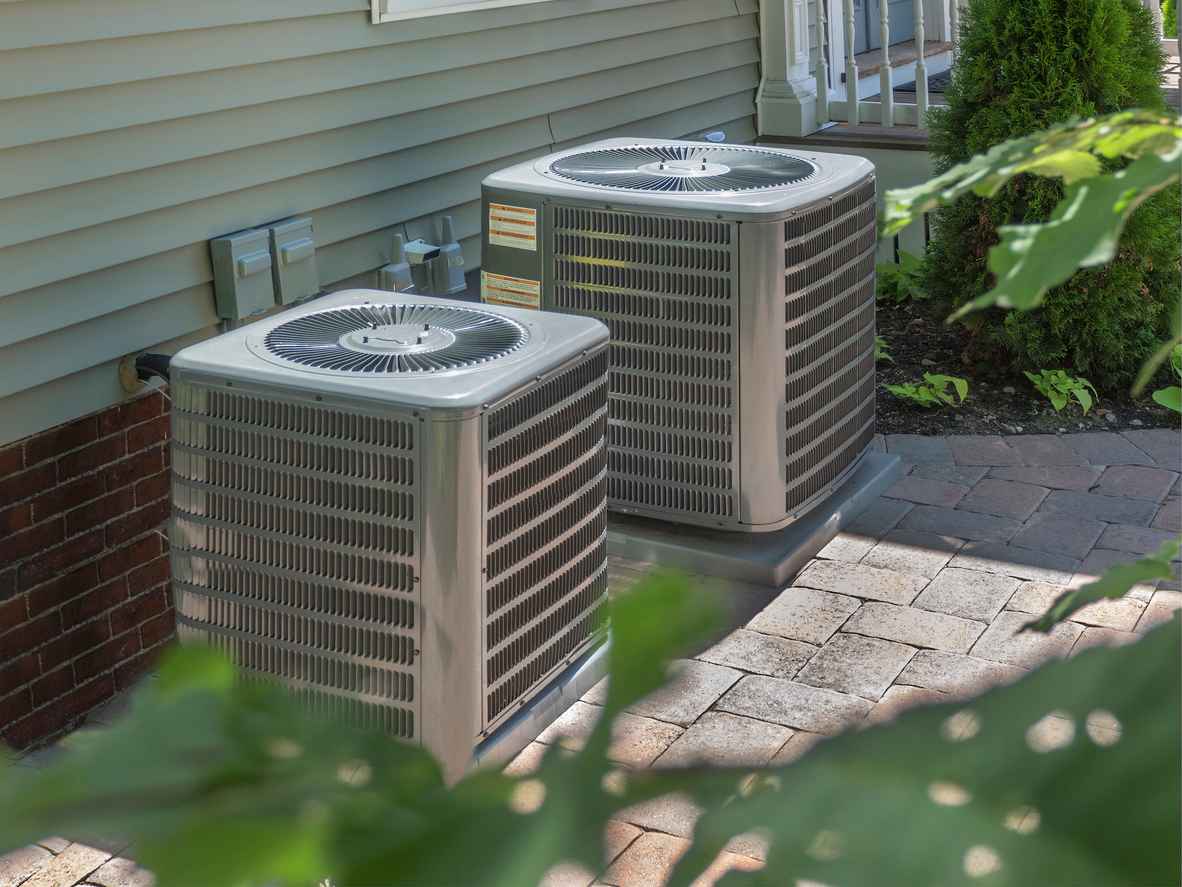
AccuWeather’s 2026 forecast for the West Valley shows daily highs between 105 and 110 degrees Fahrenheit from June through August, with overnight lows above 85 degrees during peak heat events. In that environment, an air conditioning system that begins showing performance problems in May does not have the margin to coast through a warning period the way a system in a temperate climate might. Each of the five warning signs below is associated with a specific failure mode that worsens rapidly under sustained summer load in Surprise. Addressing them before peak demand arrives is the difference between a repair visit and an emergency replacement in the middle of July.
Warning Sign 1: Warm Air From Vents Despite the System Running
A Surprise home’s supply vents should deliver air that feels noticeably cooler than the room temperature, typically 15 to 20 degrees below the return air temperature. Air that feels only slightly cool, neutral, or warm while the system runs indicates either a refrigerant circuit problem or severely fouled coils on the indoor or outdoor unit.
In Surprise, the most common cause of this symptom is a refrigerant circuit issue: either a slow leak that has gradually reduced the system’s refrigerant charge below operating specification, or a component failure in the refrigerant circuit that has stopped the compression cycle from functioning correctly. A system operating with low refrigerant in 108-degree outdoor temperatures places its compressor under significant stress with each operating cycle, accelerating wear toward failure. This warning sign warrants professional evaluation before the next Phoenix heat wave, not after.
Warning Sign 2: Run Cycles That Seem to Never End
An AC system in Surprise should cycle on, run to bring the home to the thermostat set point, and shut off. During the hottest part of a 110-degree afternoon, a properly sized and functioning system may run for extended cycles to maintain the set point against the heat load, which is expected. A system that runs continuously for hours without the thermostat registering that the set point was reached is a different condition, and it indicates that the system’s cooling capacity is inadequate for the current demand.
The most common Surprise-specific cause of this symptom is condenser coil fouling. Haboob season deposits fine silica and mineral particulate on the outdoor condenser coil fins, which are the surfaces through which the system rejects heat to the outdoor air. A coil coated with a layer of haboob dust cannot reject heat efficiently, which forces the compressor to work harder and longer for the same cooling output. Professional condenser coil cleaning restores heat rejection efficiency and frequently resolves extended run cycle complaints without any component replacement.
Warning Sign 3: Short-Cycling Between On and Off
Short-cycling describes the condition where the AC system turns on, runs for a few minutes, turns off, and then turns back on again within a short interval, repeating this pattern continuously rather than completing a full cooling cycle. This behavior stresses the compressor, which draws its highest electrical current at startup and generates its highest mechanical wear during the first seconds of each operating cycle.
Short-cycling in a Surprise home most commonly indicates one of several conditions: the system is significantly oversized for the home and reaches the thermostat set point almost immediately, causing a rapid shutdown before the humidity has been adequately addressed; a refrigerant circuit low-pressure fault is triggering an automatic safety shutoff on each attempted cycle; a failing capacitor is preventing the compressor from maintaining its operating state; or an electrical fault in the control system is causing erratic on/off behavior. Each of these causes requires a professional diagnosis to be identified correctly.
Warning Sign 4: Ice Formation on the Refrigerant Line or Air Handler
Visible ice on the refrigerant line running between the outdoor unit and the air handler, or ice forming on the air handler cabinet itself, seems counterintuitive for a system trying to cool a Surprise home. The ice forms when the evaporator coil drops below the freezing point of moisture in the air, which happens when either airflow across the coil is insufficient or the refrigerant charge is too low for the system to maintain proper evaporator pressure.
Insufficient airflow reaching the evaporator coil is the most common trigger, and a severely restricted HVAC filter is the most common cause of that insufficient airflow. Homeowners who see ice forming on the system should turn the system to fan-only mode to allow the ice to melt, then check and replace the filter before attempting to resume normal cooling operation. If the symptom recurs with a clean filter in place, the refrigerant charge or other component condition requires professional evaluation.
Warning Sign 5: Grinding, Screeching, or Rattling Sounds During Operation
An AC system running normally produces a relatively consistent sound: the compressor hum from the outdoor unit, the airflow noise from the supply registers, and the blower fan sound from the air handler. Any new mechanical sound that departs from this baseline warrants attention. Grinding sounds typically indicate debris in the blower wheel, a failing blower motor bearing, or compressor mechanical wear. Screeching sounds most commonly indicate a belt-driven blower system (common in older Surprise homes) with a worn or misaligned belt, or bearing failure in a direct-drive blower motor. Rattling sounds from the outdoor unit may indicate loose sheet metal, debris that entered the unit, or a failing condenser fan motor bearing.
Mechanical sounds in HVAC equipment almost always indicate a condition that will worsen with continued operation. A system making grinding or screeching sounds in May has a meaningful chance of failing at peak demand in July if the underlying mechanical condition goes unaddressed.
The Cost Difference Between Early Action and Emergency Repair
The financial case for addressing these warning signs before the summer peak is straightforward. A diagnostic visit and repair for a known component condition costs substantially less than an emergency after-hours service call for a complete system failure at 108 degrees Fahrenheit, where the per-hour labor rate is higher, the urgency premium affects parts availability decisions, and the range of repair options is narrower because the home has no cooling at all. The deferred maintenance cost in a Surprise AC failure is not just the repair bill. It is the repair bill plus the after-hours premium plus the reduced equipment lifespan from operating with a known fault through weeks or months of high-load summer operation.
Repair vs. Replace: How Surprise Homeowners Should Frame the Decision
The 50-percent rule is a reasonable starting point: if a single repair costs more than 50 percent of the replacement cost of the system, and the system is within the last quarter of its expected service life, replacement merits serious evaluation. In Surprise, a system’s expected service life in years is shorter than the 15 to 20-year national average because of the higher annual operating hours, which compresses the comparison considerably. A Surprise homeowner with a 10-year-old system facing a significant compressor repair is in a different position than the same homeowner in Phoenix with an equivalent-age system in terms of remaining service life.
Homeowners in Surprise who notice any of the five warning signs above should contact licensed AC repair professionals in Surprise, AZ for a diagnostic evaluation before the next heat wave arrives. An honest assessment of the system’s condition and the repair cost in the context of the unit’s remaining service life gives homeowners the information needed to make a confident decision, rather than facing that decision under pressure at 108 degrees with no cooling in the home.